Ten Tips for Parents – How to Support Learning English
Simple ways to incorporate English into everyday life at home.


Simple ways to incorporate English into everyday life at home.
At Mozaika, we support the natural development of the mother tongue, because a strong foundation in Czechis essential for cognitive development, emotional expression, and later school success. The richer a child’s language, the easier it becomes to learn another one.
We believe that children should never feel pressured to learn English at the expense of their mother tongue. That’s why we create an environment for natural English acquisition, so it becomes part of everyday life for children of all ages.
Our aim is not rushed mastery of English, but nurturing curiosity, joy, and confidence in the learning process. We encourage parents to support the development of Czech at home while also introducing English in a playful, gentle way. This balance allows children to grow naturally in both languages attheir own pace.
In the following Ten Tips for Parents, you will find simple ways to incorporate English into everyday life at home, in harmony with your child’s natural language development.
.jpg)
Create a positive environment for English
Include English in everyday life—songs, books, movies. When English appears, it should feel fun.
Be patient and celebrate small successes
Learning a language is a journey. Appreciate every step forward, even the tiniest one. Offer guidance,but let your child explore, make mistakes, and learn at their own pace.
Be a role model of learning and curiosity
Show your child that learning is a lifelong adventure. Share your own experiences with language learning—no matter your level of English.
Support social interaction in English
Create natural opportunities for your child to encounter English outside of school. This might be on vacation, while playing with friends, or at social events with peers who speak English.
Use songs and rhymes
Children love rhythm and repetition! Sing English songs suitable for your child’s age and simple rhymes—they help develop pronunciation, vocabulary, and listening skills.
Use technology creatively
Language apps, educational videos, or interactive games can be great tools for learning English. Quality matters more than quantity. Monitor how your child uses technology and how much time they spend on it.
Between ages 6–12, talk often about the benefits and possible risks of technology.
Read together — in English, too
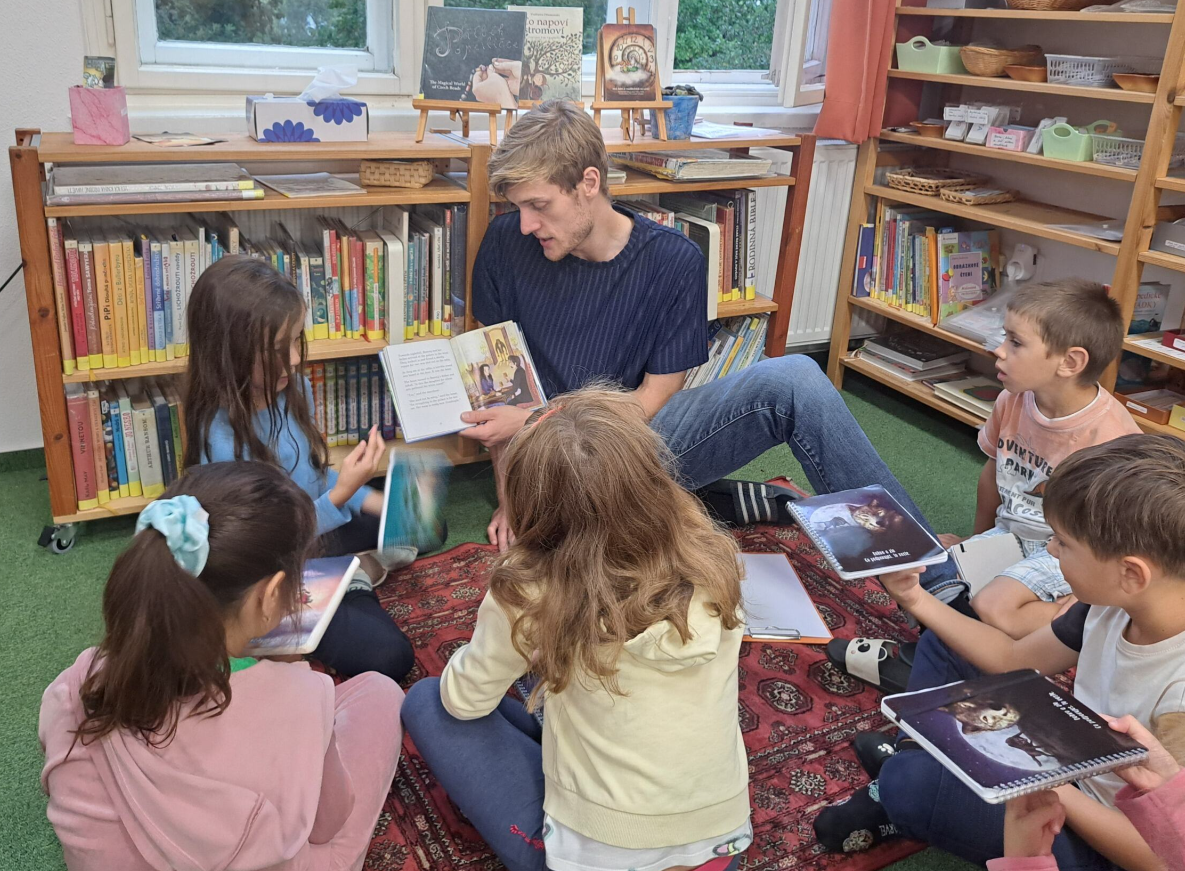
Start with simple books and gradually move to more complex ones. Shared reading develops vocabulary,comprehension, and listening. If you’re unsure about your English, use audiobooks or read-along videos—listen and look at the book together with your child.
Practice English at home regularly, but without pressure
Short, regular exposure is most effective. Try to create small daily moments of contact with English in natural situations.
Encourage active engagement
Motivate your child to speak, respond, and participate in English. Even simple answers, naming objects, responding to questions, or acting out stories help build confidence.
Enjoy the journey to English success together
Your enthusiasm is contagious! If you show that English is fun, your child will see it as a source of enjoyment and connection.
What has worked for others?
Everyone needs to find their own path. You can take inspiration from tips shared by other families:
• “We enjoy watching TED-Ed videos; you can filter them by topic on their website.”
• “When listening to songs in the car, we pick out words or sentences, repeat them, and talk about what they mean.”
• “At home, we set our oven and phones to English.”
• “We enjoy putting sticky notes with English labels on different objects at home.”
• “When watching movies, we repeat certain sentences or words using the subtitles.”





.jpg)